
June 17, 2026
What to Expect at a Bridal Hair and Makeup Trial: A Stylist's Honest Answer
The short answer: Expect a relaxed two-to-three hour session where your artist consults with you, then creates one full hair and makeup look you can adjust until it's right. You'll test how products wear, take photos in different light, and leave knowing exactly how your wedding morning will go.
If you've never sat in the chair for a bridal hair and makeup trial before, the whole thing can feel a little mysterious. You booked it because someone told you to, but nobody actually explained what happens once you get there—how long it takes, whether you're supposed to bring anything, or what you're even allowed to ask for.
I've run hundreds of these trials over more than two decades, and I can tell you the brides who walk in knowing what to expect get far more out of the appointment than the ones who walk in nervous and unsure. So here's the honest, behind-the-chair version: what actually happens, how to prepare, what to bring, what to wear, and when to schedule it.
 Photo: Kinokrown K via Pexels
What Actually Happens at a Bridal Hair and Makeup Trial
A trial is a full dress rehearsal for your wedding-day look—just without the dress. Here's how a typical session unfolds from the moment you sit down.
It starts with a conversation, not a brush. Before I touch your hair or open my kit, we talk. I want to see your inspiration photos, hear about your dress, your venue, the vibe of the day, and—just as important—what you don't like. A bride who shows me five photos of soft, undone waves and then mentions she hates anything that touches her face has told me everything I need to know. That conversation shapes every decision that follows.
Then we build the look. I'll do one complete hair style and one complete makeup application, start to finish, exactly as I would on your wedding morning. This isn't a sampler of six half-finished options—it's one cohesive look done properly, so you can see the real thing rather than a guess.
We test, not just create. Part of the point is longevity. I'll note how your skin behaves over the session, how your hair holds, where a curl wants to drop. We're not just chasing a pretty result for the next ten minutes—we're checking that it survives a Texas afternoon, a few happy tears, and a hundred hugs.
You adjust until it's right. This is your appointment. If the lip is too bold, we soften it. If the updo sits too high, we drop it. Small tweaks are exactly what the trial is for, and a good artist expects them—I'd genuinely rather make ten adjustments now than hear "I wasn't sure about it" on your wedding day.
On-location trials work a little differently. Because I come to you, your trial often happens right where you'll get ready—or somewhere close to it. That's a quiet advantage most salon trials don't offer: we get to see how your look reads in your actual lighting, in a real room, instead of under perfect salon bulbs. More on why that matters below.
 Photo: Trung Nguyen via Pexels
Do You Need a Bridal Hair and Makeup Trial?
Here's where I'll plant my flag: yes, you do—and not for the reason most guides give you.
Most articles will tell you a trial is about "finding your look." That's part of it. But the bigger reason is this: a trial is the only way to find out, before it counts, whether your artist can actually execute the look in your head and whether the two of you click. You're going to spend the most emotional morning of your life sitting a foot away from this person. The trial tells you if that's going to feel calm or tense. The look is the visible part. The fit is the part that actually saves your morning.
When I've done a trial with a bride, I show up on the wedding day already knowing how her hair holds a curl, where her cowlick lives, what her skin needs, and how she likes to communicate. When we're meeting for the first time on the wedding morning, I'm learning all of that on the fly—with a clock running and a photographer waiting. The trial is what turns your wedding morning from a first date into a reunion.
The honest exception: if you wear minimal makeup, you're confident doing your own, and you're truly happy with it, you may not need a full trial. But if a professional look matters to you at all—if you've pinned a single inspiration photo—skip the trial at your own risk.
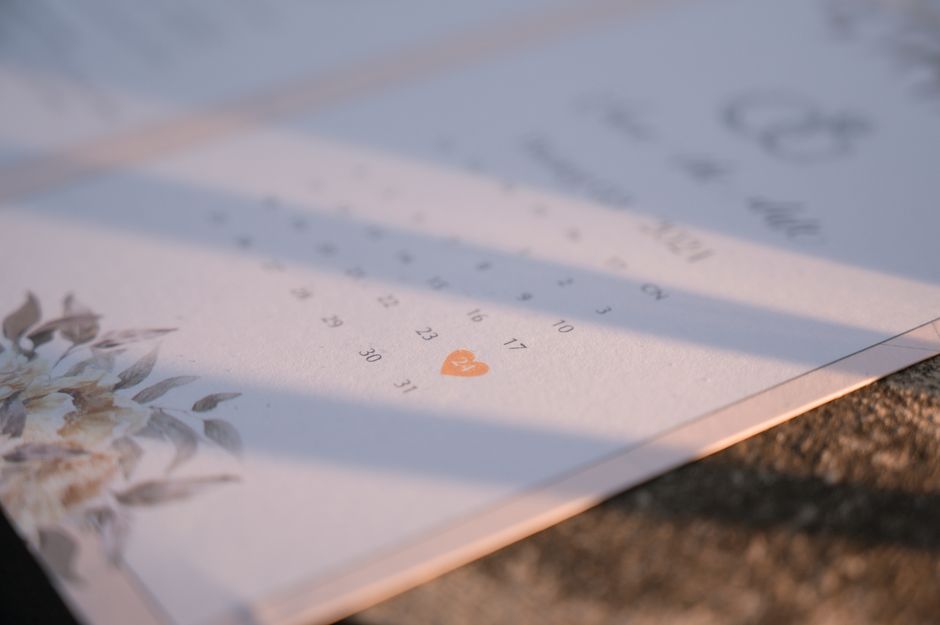 Photo: Đậu Photograph via Pexels
When Should You Schedule a Bridal Hair Trial?
The sweet spot is two to three months before your wedding. That window is close enough that your hair length, color, and skin are roughly what they'll be on the day, but far enough out that there's still time to make changes—book a haircut, order extensions, adjust a skincare routine, or tweak the look after you've lived with it for a few weeks.
A couple of timing notes worth knowing:
- Book the appointment far earlier than you have it. In the DFW market, peak-season Saturdays fill up fast. I tell brides to reserve their wedding date and their trial date together, often nine to twelve months out, even though the trial itself happens much closer to the wedding.
- Try to align it with a real event. If you can schedule your trial the same day as your engagement photos, bridal shower, or rehearsal dinner, you get a free real-world test drive—you'll see how the look holds through a full day and how it photographs.
- Don't schedule it the week of the wedding. You want room to think, not a panic adjustment with no time left to fix anything.
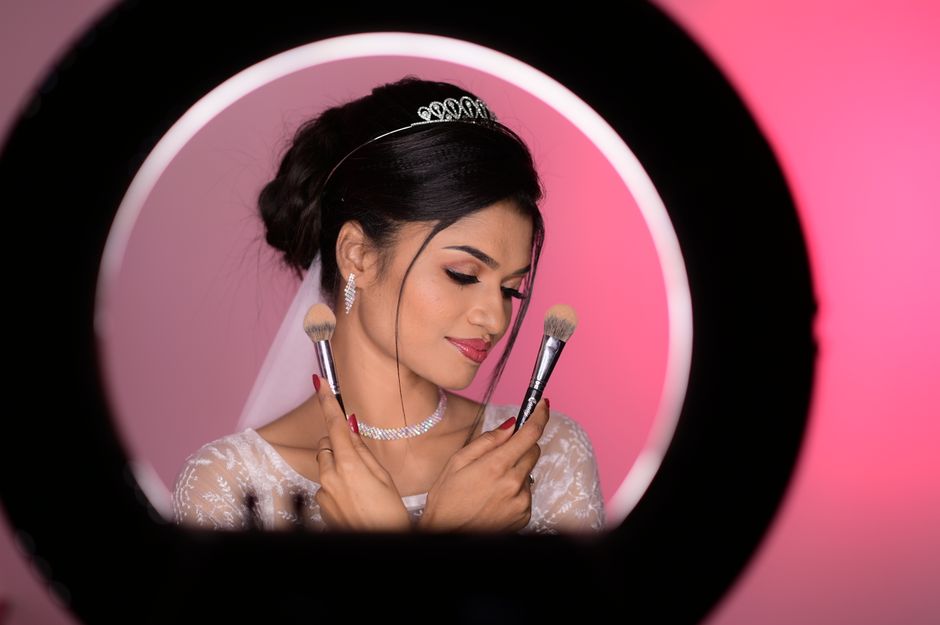 Photo: Thangaraj Editor via Pexels
How to Prepare for a Bridal Hair and Makeup Trial
A little prep makes the whole session more accurate—because the closer you arrive to your real wedding-morning condition, the more honest the result.
Skin: Come with clean, moisturized, bare skin. Don't try a brand-new product or a strong exfoliant in the 48 hours beforehand—a trial day is not the day to discover you react to something. If you're planning any facials or treatments before the wedding, mention them, so we account for how your skin will look afterward.
Hair: Arrive with clean, dry, product-free hair, ideally washed the day before rather than that morning. Day-old hair holds a curl and an updo far better than squeaky-clean hair—one of those counterintuitive truths every stylist knows and every bride is mildly skeptical about until she sees it.
Mindset: Come ready to talk and ready to be honest. The single most useful thing you can bring is clear feedback, which is harder than it sounds—more on that in a second.
A second opinion (one): Bring one trusted person whose taste you actually trust, if you'd like. One. A mother, a maid of honor, a sister. A committee of six in a small room with strong opinions and weak filters is how a bride ends up second-guessing a look she actually loved.
 Photo: The Visionary Vows via Pexels
What to Wear to a Bridal Makeup Trial Appointment
What you wear genuinely changes how accurate the preview is, so this is worth thinking about for two minutes the night before.
- Wear a white or light-colored top. Your wedding dress is almost certainly white, ivory, or champagne, and that color reflects light up onto your face. A black tee throws everything off. A light top in a neckline similar to your dress gives you the truest preview.
- Choose a top you can take off without pulling it over your head. A button-down or zip-up means you can change later without dragging a shirt across your finished hair and makeup. Save yourself the heartbreak.
- Skip a turtleneck or high collar. You want to see your neckline, your collarbones, and how the makeup blends into your décolletage—the same areas your dress will show.
- Keep your own makeup minimal. Arrive with a bare or near-bare face so we're building on you, not on this morning's foundation.
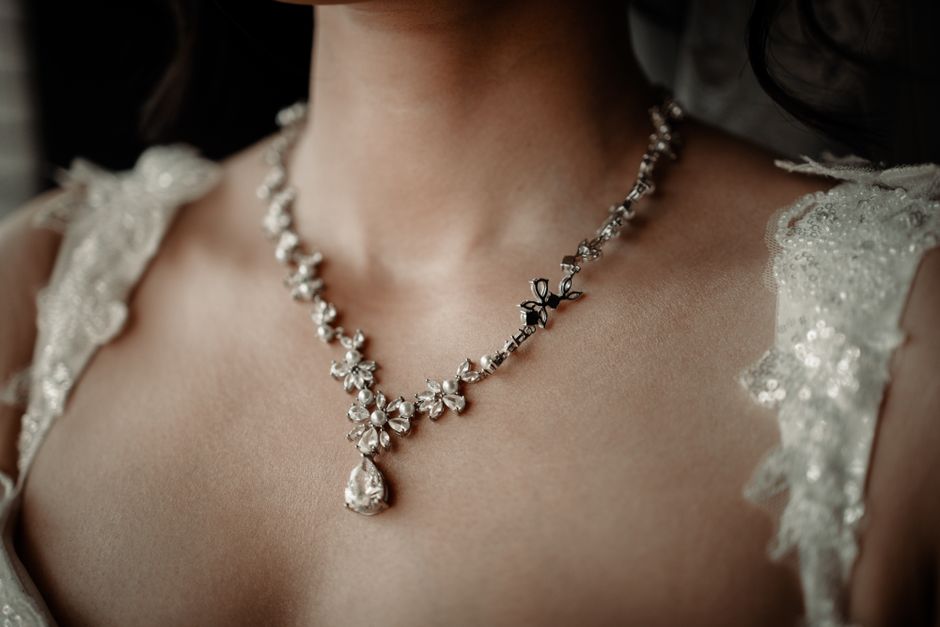 Photo: Gursher Gill via Pexels
What to Bring to Your Bridal Hair and Makeup Trial
The right items turn a good trial into a genuinely useful one. Here's your checklist:
- [ ] Inspiration photos — two or three for hair, two or three for makeup. Choose images of people whose features, skin tone, and hair texture are close to yours; a look on someone with very different coloring won't translate the same way.
- [ ] Your hair accessories — veil, comb, headpiece, hairpins, or fresh-flower stand-ins. We design the style around what's actually going in your hair.
- [ ] Your jewelry — the earrings and necklace you plan to wear, so we can balance the makeup and updo against them.
- [ ] Your extensions — if you're using them, bring them so we can color-match and blend during the trial, not for the first time on the wedding morning.
- [ ] A photo of your dress — neckline and overall style help me match the look to the gown.
- [ ] Your phone, charged — for photos (see below).
- [ ] An open, honest opinion — the most valuable thing on this list.
Take photos before you leave. Step into different light—by a window, outside, in a dim room—and take pictures from several angles, including from below, the way a camera at the ceremony will catch you. Your look should hold up everywhere, not just in the one flattering spot you happened to be sitting.
And here's the part most brides find hardest: tell me the truth. If something feels off, say so in the moment. You will not hurt my feelings—I promise. "I love the hair, but the lip feels too dark for me" is one of the most helpful sentences a bride can say, because it lets me fix it while you're still in the chair. The bride who smiles politely, goes home, and texts three days later that she wasn't sure about the whole thing has cost us the best chance to make it perfect. Honest feedback at the trial isn't rude. It's the entire point.
Frequently Asked Questions
How long does a bridal hair and makeup trial take?
Plan on two to three hours. That includes the consultation, a full hair style, a full makeup application, and time to make adjustments. It runs a little longer than your wedding-morning timing because we're talking through choices and tweaking as we go, rather than executing a look we've already settled on.
Do you really need a bridal hair and makeup trial?
For most brides, yes. Beyond perfecting the look, a trial confirms your artist can execute your vision and that you're comfortable with them before the big day. The only brides who can reasonably skip it are those wearing minimal makeup they're confident doing themselves.
How much does a bridal trial cost?
It varies by artist and market. For Beauty on Demand, a bridal trial is its own appointment at $175 per service — hair and makeup are priced separately, so a trial for both is $350. Always confirm whether the trial is a separate appointment or included in your bridal package, and whether prices are per service or per person, since that differs from artist to artist.
When should you schedule a bridal hair trial?
Two to three months before the wedding is ideal—close enough that your hair and skin reflect the real day, far enough out to make changes. Book the appointment far earlier than that, though, especially for peak-season DFW dates that fill quickly.
Can I bring someone to my trial?
Yes—bring one trusted person whose taste you genuinely value. Just keep it to one. A large group with strong, competing opinions tends to talk a bride out of a look she actually loved.
What if I don't like the trial look?
That's exactly what a trial is for. Tell your artist in the moment—calmly and specifically—and a good one will happily adjust until it's right, or rework the approach entirely. Far better to discover it at the trial than on your wedding morning.
Ready to Book Your Trial?
A bridal hair and makeup trial isn't a formality—it's the appointment that lets you walk into your wedding morning already knowing exactly how it's going to feel. If you're planning a wedding in Rockwall, Heath, Fate, Royse City, Wylie, Sachse, Forney, or anywhere in the greater DFW area, I'd love to sit down with you, hear your vision, and create a look that's truly yours. You can see my recent work on Instagram at @elizabethnerbun.
Elizabeth Nerbun is a licensed cosmetologist and certified beauty instructor with over 20 years of experience specializing in on-location bridal hair and makeup throughout the Rockwall, TX and greater DFW area.
More Bridal Beauty Tips
Ready to Book?