
September 22, 2026
Wedding Hair with a Veil: How to Wear Both
The short answer: Almost every bridal hairstyle works with a veil. What changes is where the veil sits and what's underneath it holding it there. Build the style first with an anchor point for the comb, place the veil just above or just below the bulk of the hair, and plan for how it comes out.
Here's the thing nobody tells you about wedding hair with a veil: the veil is not an accessory you add at the end. It's a structural decision you make at the beginning.
I've been a licensed cosmetologist since 2002, and the single most common thing I fix at trials is a bride who picked a hairstyle from Pinterest, picked a veil from a different shop on a different day, and assumed the two would cooperate. Sometimes they do. Often the veil wants to sit exactly where the hairstyle has nothing to grip.
None of this is hard to solve. It's just much easier to solve before your wedding morning than during it.
 Photo: Snap Perfections via Pexels
Start With the Veil, Not the Hairstyle
If you've already bought your veil, bring it to your trial. If you haven't, know its length and style before you settle on your hair.
Veil length changes what the hairstyle has to do:
- Birdcage — sits at an angle on the front or side of the head. Works best with something structured to pin into: a low side bun, a vintage roll, or short hair. It needs very little anchoring.
- Blusher or shoulder-length — light and short. Almost anything works. This is the most forgiving option.
- Fingertip — the most common choice, and the most flexible. Sits comfortably with hair up, down, or half-up.
- Chapel and cathedral — long and genuinely heavy. Weight is the whole consideration. A cathedral veil pulling on a loosely pinned updo for six hours will find every weak point in it.
- Mantilla — lace-edged, worn draped over the crown rather than pinned underneath. It wants hair that's flat and smooth where it sits, so a voluminous crown works against it.
That last point is the general principle: a heavier veil needs a firmer anchor. If you want a cathedral veil and a soft, undone updo, those two things are in tension, and your stylist needs to know that before the morning of — usually solved with a hidden braid or a reinforced pin base underneath.
Where the Veil Actually Sits
Veil placement is really a question of one thing: what is the comb pushing into?
Just above the crown is the classic placement and the most secure. It's high enough to show the back of the hairstyle, low enough that the weight pulls down rather than back.
Underneath a bun or chignon tucks the comb in at the nape, hides it completely, and lets the veil fall from below the hairstyle. This is the placement to ask for if you want the shape of your updo to stay visible in photographs.
On top of a bun puts the veil over the hairstyle instead of under it. It reads more traditional and it's easier to remove cleanly later — which matters more than you'd think.
Low at the nape suits long hair worn down and softer, looser styles. Least secure of the four, so it wants a proper anchor built in.
There's no correct answer. But there is a correct order of operations, and it's this: decide the placement, then build the hairstyle around that spot. Doing it the other way round is how you end up with a comb jammed into a section of hair that can't hold it.
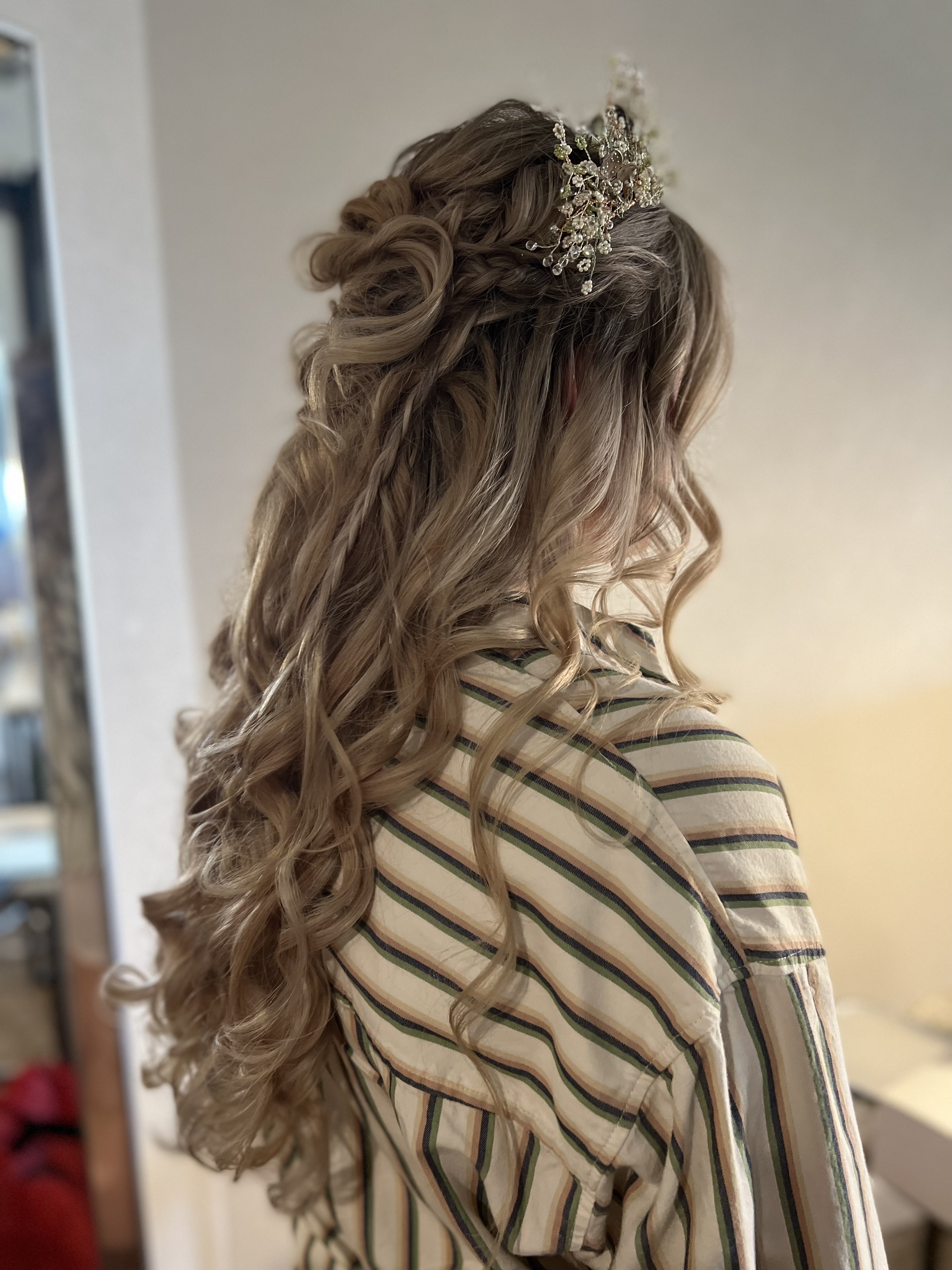 A half-up style built around a comb placement — Beauty on Demand
Wearing a Veil with Your Hair Down or Half-Up
This is where most brides run into trouble, because hair worn fully down gives a veil comb almost nothing to hold onto. It slides. Then it slides more. Then someone's cousin is re-pinning it behind the barn at 4pm.
Three things fix it:
Backcomb the anchor point. A small, discreet section of teasing exactly where the comb goes gives it texture to bite into. This is invisible in photos and it is the single most effective trick there is.
Go half-up instead. A half up half down wedding hair style is the honest compromise, and it's the most requested look I do. You keep the length and movement visible, but you've created a secured section for the veil to attach to. It's also dramatically more stable over a long day — which is the real answer to how to make half-up hair last: the up part is doing structural work, not just decorative work.
Build in a hidden anchor. A small braid running horizontally underneath where the comb sits, or two bobby pins crossed into an X, gives the comb something engineered to grip. Takes ninety seconds. Changes everything.
If your heart is set on hair fully down with a long veil, that's doable — it just needs the anchor built in deliberately rather than hoped for.
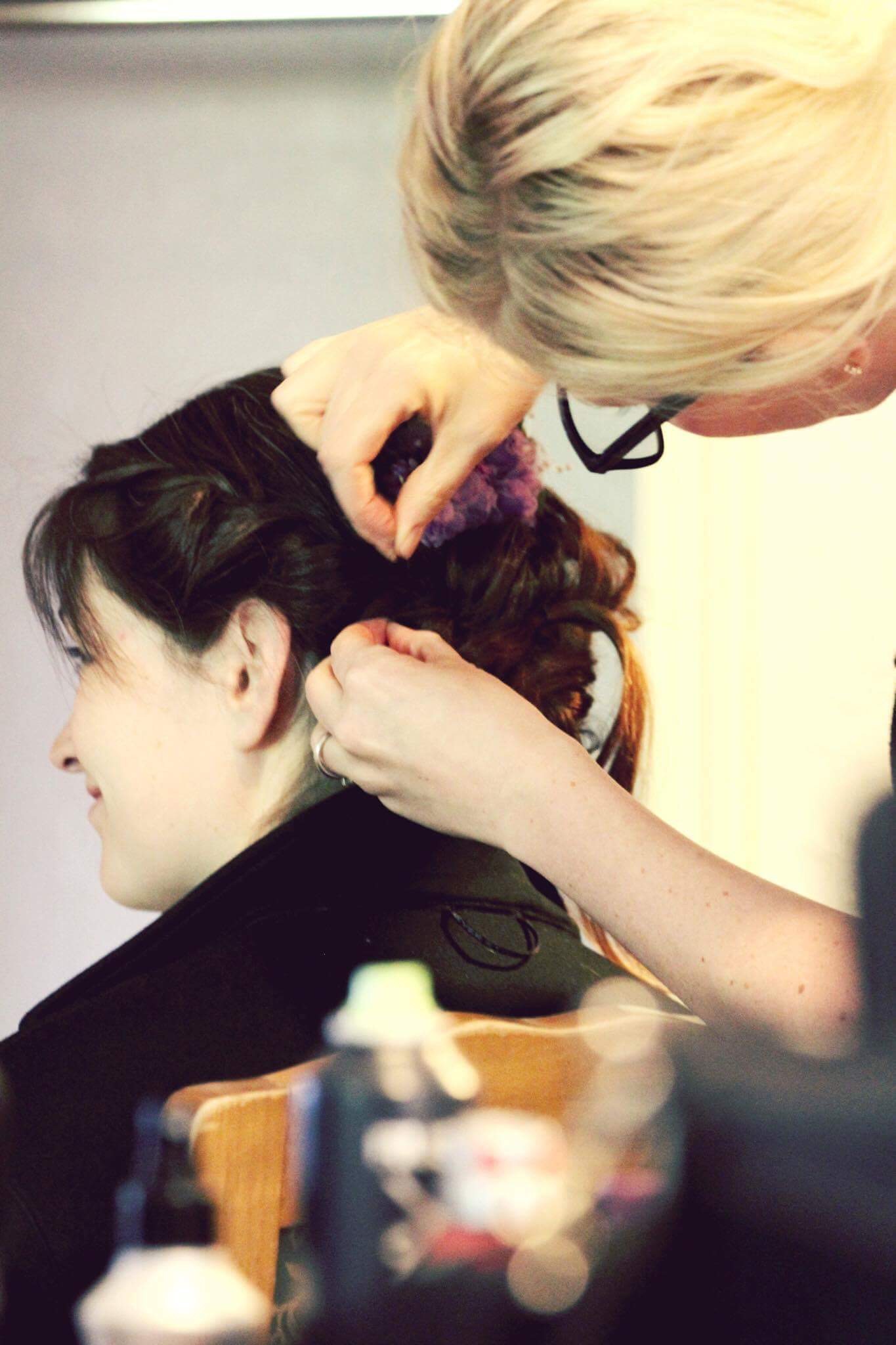 Securing an updo with the accessory placement planned in — Beauty on Demand
Wearing a Veil with Your Hair Up
Updos and veils are natural partners, but "updo" covers a lot of ground, and the type matters.
A formal updo — a sleek chignon, a structured low bun, a French twist — is smooth, tightly pinned, and holds a heavy veil without complaint. It's the most secure option for a cathedral-length veil, full stop.
A loose bridal updo is the softer, more textured cousin: pieces pulled out around the face, visible movement, a deliberately undone finish. It's the dominant look right now and it suits the boho, outdoor Texas weddings I do most. The difference from a formal updo isn't skill or security — a good loose updo is pinned just as firmly underneath. It's that the pinning is hidden beneath texture rather than smoothed over.
That distinction matters for veils: a loose updo has more surface irregularity, so the comb placement needs to be chosen and reinforced rather than just pushed in wherever.
And on how to keep a wedding updo in place all day — the honest version is that it's decided by preparation, not product:
- Clean hair is the enemy. Day-old hair holds infinitely better than freshly washed hair.
- Skip conditioner on the roots the night before.
- Texture spray or a light dry shampoo through the mid-lengths gives pins something to hold.
- Pins go in against the direction of the hair's fall, not with it.
- Hairspray is the finish, not the structure. If the style is only staying up because of hairspray, it isn't staying up.
Matching It to Your Face Shape
How to choose your wedding hairstyle for your face shape is a real question, though it matters less than the internet suggests. A few honest guidelines:
- Round — height at the crown and some length left around the jaw. Avoid a severe center-parted slick-back.
- Square — soft pieces around the face; curves against the angles. Loose updos are very flattering here.
- Heart — volume at the jaw rather than the crown; side-swept works well.
- Long or oval — almost anything; oval especially. Watch that a very high updo doesn't add more length.
Then the veil interacts with all of it. A blusher worn forward shortens a long face. A high-placed veil adds height to a round one. A mantilla frames and softens a square jaw better than almost anything else.
This is exactly the kind of thing that's much easier to see than to read about, which is what a trial is for.
The Part Nobody Plans For: Taking It Out
Here's the gap in every veil article I've read — and it causes more wedding-day stress than placement ever does.
Your veil comes out at some point. Usually after the ceremony and formal photographs, before the reception. And when it comes out, whatever was holding it in comes out with it.
If the veil was pinned directly into the structure of your updo, removing it can pull the whole shape loose. I've watched a bride lose half her hairstyle to an enthusiastic maid of honour yanking a cathedral veil free in one motion at 7pm.
So plan for it:
- Ask your stylist to set the veil so it removes independently of the hairstyle. That usually means the comb goes in as its own unit, not woven into the pinning that's holding the style together.
- Have one person shown how to remove it. Not five people guessing — one person, shown in daylight, while I'm still there.
- Know it's two hands, slowly, straight back. Not up, not sideways, and never one-handed while holding a drink.
- Keep six matching bobby pins in your bag for the tidy-up after.
If you want a completely different look for the reception — veil out, hair down, or a comb swapped in — say so at the trial. That's a style that has to be built to come apart, and it's a genuinely lovely thing to plan for. It just can't be improvised.
Veils, Wind, and a Texas Afternoon
If your ceremony is outdoors around Rockwall — and most of mine are — the wind is a bigger factor than anything else on this page.
A long veil in an open field is a sail. It will lift, it will wrap around your arms, and it will find your lipstick. None of that is a disaster, and some of it makes for the best photographs you'll get all day. But it does change what the hair underneath needs to do.
For an outdoor Texas ceremony:
- Anchor at two points, not one. A second comb or a few strategic pins on the opposite side stops the veil pivoting in a gust.
- Heat and humidity are hard on soft styles. If you're marrying between June and September, a firmer base will outlast a loose one — worth weighing when you pick your date around the weather.
- Decide in advance when the veil comes off. Most outdoor brides are happier removing it after portraits rather than fighting it through cocktail hour.
- Tell your photographer you want the wind shots. They'll frame for it. That's how the veil goes from a problem to the best photo in the gallery.
Bring the Veil to Your Trial
Everything above gets settled in one appointment.
Bring the actual veil — not a photo of it, not a similar one. Bring any comb, pins, or hairpiece you're planning to wear. Wear a top with a neckline close to your dress. Then we put the whole thing together, take photos from the back in daylight, and take the veil out to see what the hair looks like underneath.
That last step is the one brides don't think to ask for and the one they thank me for later. You'll know exactly how the evening version of your hair looks before the day itself.
Here's what else to expect at a bridal trial, and if you're working out your morning schedule, here's how the hours actually add up across a wedding party. You can see more finished hair on the gallery.
Frequently Asked Questions
Can you wear a veil with your hair down?
Yes, but it needs a deliberate anchor. Hair worn fully down gives a veil comb very little to grip, so ask your stylist to backcomb a small hidden section where the comb sits, or to build a small concealed braid underneath. Without one of those, a long veil will gradually slide.
Where should a wedding veil sit on your head?
Just above the crown is the most secure and the most common placement. A veil can also tuck underneath a bun to hide the comb and keep the hairstyle visible, sit on top of a bun for a more traditional look, or sit low at the nape with softer styles. Choose the placement first, then build the hairstyle around it.
How do you keep a wedding updo in place all day?
Start with day-old hair rather than freshly washed, skip conditioner at the roots the night before, and add texture spray or light dry shampoo through the mid-lengths so pins have something to grip. Pins should go in against the direction the hair falls. Hairspray finishes a style but never holds one up on its own.
Should you take your veil off at the reception?
Most brides do, usually after the ceremony and formal photographs. Ask your stylist to set the veil so it lifts out independently of the hairstyle, and have one person shown how to remove it properly — two hands, slowly, straight back — so the updo underneath stays intact.
Do you need to bring your veil to your hair trial?
Yes, and bring the actual veil rather than a picture of it. Length and weight change where it can sit and what has to hold it there. A trial with the real veil also lets you see how your hair looks once it's removed, which is how you'll wear it all evening.
What is a loose bridal updo?
A loose updo is a softer, textured version of a classic updo — face-framing pieces pulled out, visible movement, a deliberately undone finish. It's pinned just as securely as a formal updo; the pinning is simply hidden beneath texture instead of smoothed over.
Which wedding hairstyle suits my face shape?
Round faces suit height at the crown with some length near the jaw; square faces suit soft face-framing pieces; heart-shaped faces suit volume around the jaw rather than the crown; oval suits almost anything. Your veil style affects the balance too, which is easiest to assess in person at a trial.
Let's Work It Out Together
If you've got a veil and no idea what hairstyle goes with it — or a hairstyle you love and a veil you're not sure will cooperate — that's a fifteen-minute conversation, not a problem.
Tell me your date, your venue, whether you're indoors or out, and what your veil looks like. I'll tell you honestly whether the two work together and what we'd do if they don't.
I serve brides throughout Rockwall, Heath, Fate, Royse City, Rowlett, Wylie, Sachse, Forney, and the greater DFW area. You can see recent work on Instagram at @elizabethnerbun, or call or text (262) 366-4414.
Elizabeth Nerbun is a licensed cosmetologist and certified beauty instructor with over 20 years of experience specializing in on-location bridal hair and makeup throughout the Rockwall, TX and greater DFW area. You can verify any Texas stylist's cosmetology license through the Texas Department of Licensing and Regulation.
More Bridal Beauty Tips
Ready to Book?